OM Pravat and Adi Kailash also known as Chhota Kailash is an area of great natural beauty, peace and serenity.
During this trek one gets an opportunity to view the snow peaks of
JONGLINGKONG is another name of Chhota Kailas (6191m) while its small but beautiful lake is called Parvati Tal.
The reflection of the peak in the lake is really fascinating.
There is a temple near the lake, which is sometimes visited by swan-like birds. A little distance from here is to be found the remains of a dry lake.
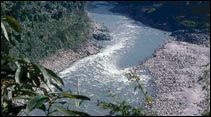
Along the river Kuti are two passes Lampia Dhura and Mangsa Dhura, both leading to
The ITBP and SPF personnel will tell whether one can cross the Sinla pas to reach Dedang.
If this is not possible one will have to return.
If there is little or no snow, one should set out early in the morning to cross the pass.
The route to Sinla pass is under a heavy blanket of snow.
One can see the Chhota Kailas peak constantly from there.
The traditional trekking route is from
And remember the grade of trekking is strenuous, and the duration is 23 to 24 days.Enjoy your time here in the lap of